

Season 1
Building Intelligent Environments That Earn Human Trust
Most homes today contain sophisticated technology, yet many people still experience those homes as confusing, fragmented, intrusive, unpredictable, and difficult to trust.
Season 1: Building Intelligent Environments That Earn Human Trust
Eleven questions. One connected story.
Season 1 begins with Human Trust, introduces the Home Operating System, and then follows the architectural sequence from Truth through Identity, Operational Trust, Stewardship, Continuity, and Concierge. The season concludes with Explainability, Governance, and Technical Debt, showing how intelligent environments can remain understandable, trustworthy, and capable of evolving safely over time.
Each episode explores a single question. Together, those questions form one connected story.
Season 1
Eleven Questions. One Connected Story.
Each episode explores a single architectural question. Together, they form a connected journey from the trust problem facing intelligent environments through the architectural responsibilities that enable a home to behave well.

Why Do Intelligent Homes Still Feel Dumb?
Human Trust
Despite decades of innovation, many smart homes remain frustrating, fragmented, and difficult to understand. This episode introduces the central trust problem facing intelligent environments and presents the Behaves Well Framework™ as an architectural approach for earning trust through behavior rather than technology alone.

What Is a Home Operating System?
Operating Model
What responsibilities should coordinate an intelligent environment? This episode introduces the Home Operating System as an architectural operating model that defines ownership, boundaries, contracts, coordination, and execution across connected devices, services, automations, and intelligent capabilities.

How Does a Home Know What Is True?
Truth
Before a home can help, it must understand reality. This episode explores Truth as the architectural foundation of intelligent environments, showing why sensors produce evidence, why evidence requires interpretation, and how authoritative facts create the shared reality that every other responsibility depends upon.
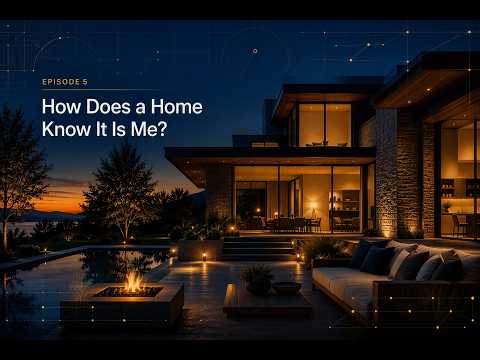
How Does a Home Know It Is Me?
Identity
Truth may establish that someone is present, but Identity must determine who is engaging. This episode explores how intelligent environments combine evidence from voice, mobile devices, wearables, kiosks, presence systems, and other signals to establish identity confidence without confusing identity with permission or trust.

How Does a Home Know What Is Allowed?
Operational Trust
Knowing who is engaging does not automatically determine what that person may access or do. This episode explores Operational Trust and how intelligent environments apply permissions, authorization, privacy, context, and policy to determine what is allowed for a particular person, capability, and situation.

How Does a Home Know What Matters?
Stewardship
Not everything in a home is equally important. This episode explores Stewardship and how intelligent environments determine significance, identify priorities, protect what is valuable, and care for the people, animals, assets, experiences, and responsibilities that deserve attention.

Why Does the Home Remember?
Continuity
Preferences, experiences, routines, and context often need to continue across rooms, devices, and time. This episode introduces Continuity and explores how intelligent environments remember what should persist so that experiences can resume naturally without forcing people to begin again.

What Should Happen Next?
Concierge
Once a home understands reality, identity, permission, significance, and context, it can coordinate an appropriate response. This episode explores Concierge as the orchestration responsibility that determines what should happen next and coordinates helpful behavior across the environment.

Why Did That Happen?
Explainability
Trust requires understanding. This episode explores Explainability and shows how intelligent environments connect facts, identity, policies, priorities, context, decisions, and outcomes so people can understand why something happened, why it did not happen, or why the home behaved differently this time.

Why Do Intelligent Homes Need Governance?
Governance
Intelligent environments evolve as new technologies, services, capabilities, and household needs appear. This episode explores Governance and how ownership, policies, standards, boundaries, contracts, lifecycle management, and accountability preserve architectural clarity while enabling safe change.

Can a Home Accumulate Technical Debt?
Technical Debt
Intelligent environments evolve over many years. This episode examines architectural drift, automation sprawl, duplicate logic, hidden dependencies, orphaned rules, manual overrides, and accumulated complexity. It explores how thoughtful architecture and governance keep homes understandable, maintainable, and capable of evolving safely over time.
A Home That Behaves Well is not defined by the technology it contains. It is defined by the trust it earns.
Eleven Questions. One Connected Story.
Coming Soon
Courses, workshops, and written guides are in development.
Deep-dive courses on Home Assistant architecture, smart home governance, and the full Homes That Behave Well framework are coming. Join the list to be notified when they launch.